Reimagining Asset Mapping at Edgemont Flats
As part of the Community Animator project, four University of Alberta Occupational Therapy students partnered with Action Lab to explore how asset mapping could become a way to build connection and belonging at Edgemont Flats. In this piece, the students reflect on their process, what they learned from residents, and how their understanding of community engagement changed throughout the project.
Building Community Through Occupation At Edgemont Flats
Hello! Our names are Iris, Nicole, Megan, and Rachel, and we are Occupational Therapy students from the University of Alberta. Over the past year, we have completed a community project in partnership with Skills Society. Our project was a part of The Community Animator project, and we worked in collaboration with the Community Animator to explore new ways of building community engagement at Edgemont Flats, an inclusive housing apartment building in South-West Edmonton.
What is Occupational Therapy and what role do we have in the community?
Occupational therapy is often associated with healthcare and rehabilitation settings; however, occupational therapy also plays an important role within communities. “Occupation” refers to everyday activities people need, want and are expected to do, which can include things such as walking your dog, meeting your neighbour for coffee, or getting groceries. Occupation is foundational to how communities function, and occupational therapy offers a unique approach to addressing barriers to participation, belonging, and engagement within a community.
What is the Community Animator role?
The Community Animator role is to use Asset-Based Community Development (ABCD) and Systemic Design principles to build community engagement and create a sense of belonging amongst residents. Using ABCD principles involves identifying and leveraging community assets. Assets are strengths, skills, interests, experiences and resources that already exist within a community. These can include things such as someone's interest in gardening or cooking, or physical community spaces like a park. To learn about these assets, the Community Animator uses asset mapping, which is a way of identifying and understanding the assets that exist within the community in order to support connection and engagement within the community.
What was the goal of our Project?
Our project aimed to build on the work already being done by the Community Animator by exploring how asset mapping could be transformed from an individual information-gathering process into a collective occupation that fosters reciprocity, shared responsibility, and participation amongst residents. Instead of focusing solely on collecting information about residents' assets, we explored how the process itself could become an opportunity for connection and engagement.
How we brought the project to life
Focus Group
To help bring this project to life in a way that felt meaningful and useful for residents, we created a Focus Group made up of “lead residents” at Edgemont Flats. These residents represented a diverse group of community members who had previously participated in, supported, or shown interest in community events and activities. We also shared open invitations through the “Community at Edgemont Flats” Facebook page to ensure anyone interested had the opportunity to contribute their ideas and perspectives.
Through this process, we connected with eight residents from within the community. Their feedback played an important role in shaping the direction of the project, helping us redesign our original ideas into opportunities for residents to connect, share their strengths, and learn more about one another. Initially, our team envisioned hosting smaller, casual “block party”-style gatherings on each floor of the buildings to help neighbours connect while participating in asset-gathering activities that could inform future programming and support the Community Animator’s work. However, through conversations with residents, we learned that many community members were more interested in opportunities that brought the entire Edgemont Flats community together. Residents shared that they wanted to meet people from across both buildings and learn more about one another. This feedback helped shape the direction of the project and inspired us to shift our focus toward creating larger, community-wide opportunities where residents could connect while actively sharing their strengths, interests, and experiences with one another.
Promotion
Pop-Up Events
Following the redesign of the project, we drew inspiration from both the original “block party” concept and the idea of a drip campaign to create a series of pop-up events leading up to the BBQ. These events were designed to gradually build excitement and familiarity within the community while also encouraging residents to reflect on their own strengths, interests, and preferences.
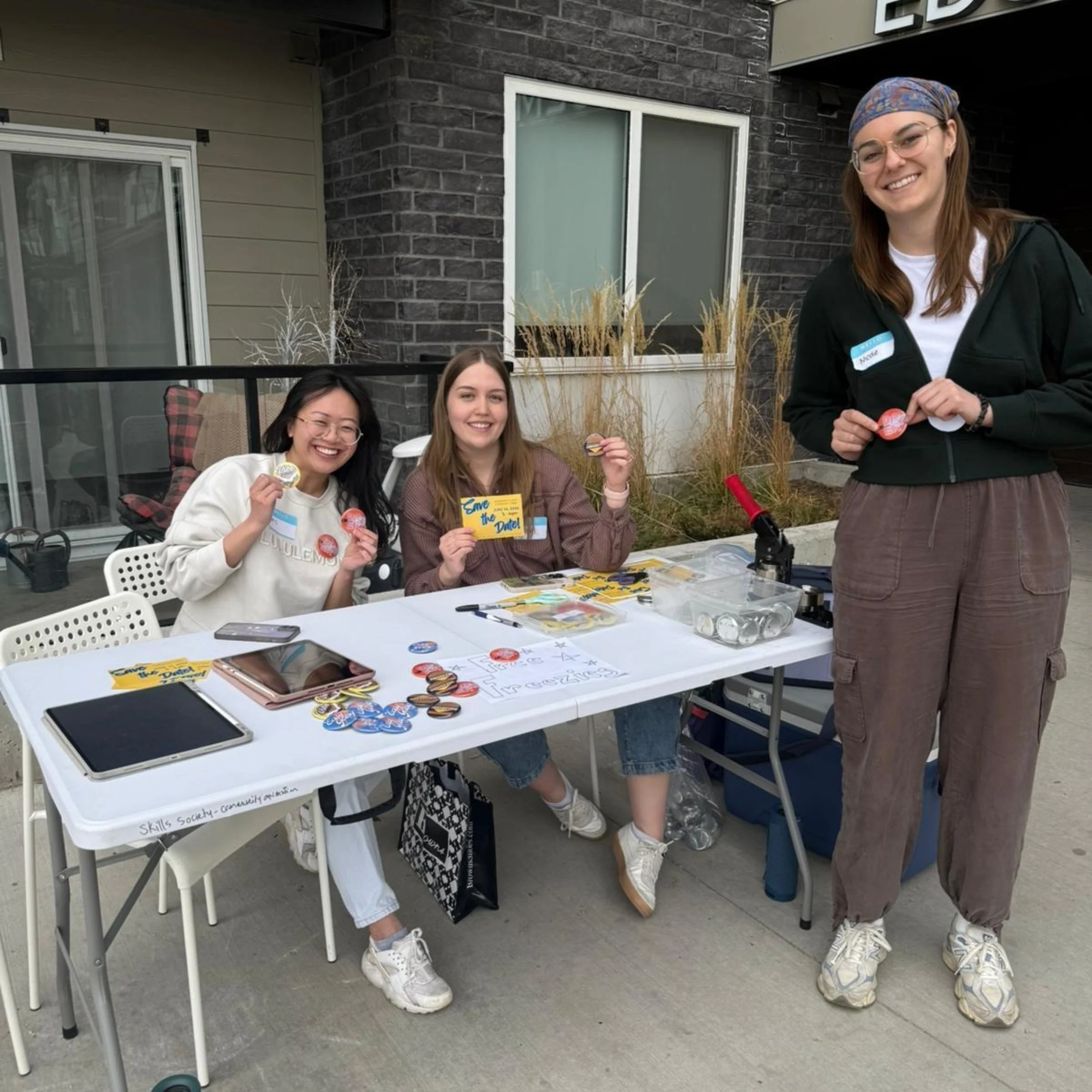
The pop-up events took place twice during the month leading up to the BBQ. Residents were invited to stop by to learn more about the event, pick up a printed “save the date” invitation, enjoy a frozen treat, and participate in small community-building activities. The featured activity was a “Which Type of BBQ Guest Are You?” personality quiz, which provided residents with one of four personality types: “Connector,” “Easy Going,” “Vibe Setter,” or “Doer” based on their responses to eight questions. Residents were then given matching personality pins and invited to wear them at the BBQ as a way to spark conversation and connection between community members.
At the first pop-up event, approximately 30 residents visited, with 28 completing the personality quiz. We observed strong initial foot traffic and interest, and as a result, adjusted the timing of the second event to better align with residents’ schedules. We also identified some confusion in our initial advertising, where the wording led some residents to believe the pop-up event itself was the BBQ. In response, we revised the messaging to improve clarity for the second event.
The second pop-up event resulted in approximately 20 residents visiting the booth. Although attendance was lower than anticipated, the event provided important feedback. Residents reported being aware of the upcoming BBQ, and several shared that they already planned to attend, suggesting that the promotional efforts had successfully increased awareness. Although the location of the second pop-up increased visibility for residents entering the parking lot, it also led to fewer spontaneous conversations with passersby. This suggests that personal interaction may have played an important role in encouraging residents to stop and participate. Overall, the two pop-up events demonstrated the value of prototyping and iteration, allowing us to test assumptions, gather feedback, and adapt our approach throughout the project.
Community Boards
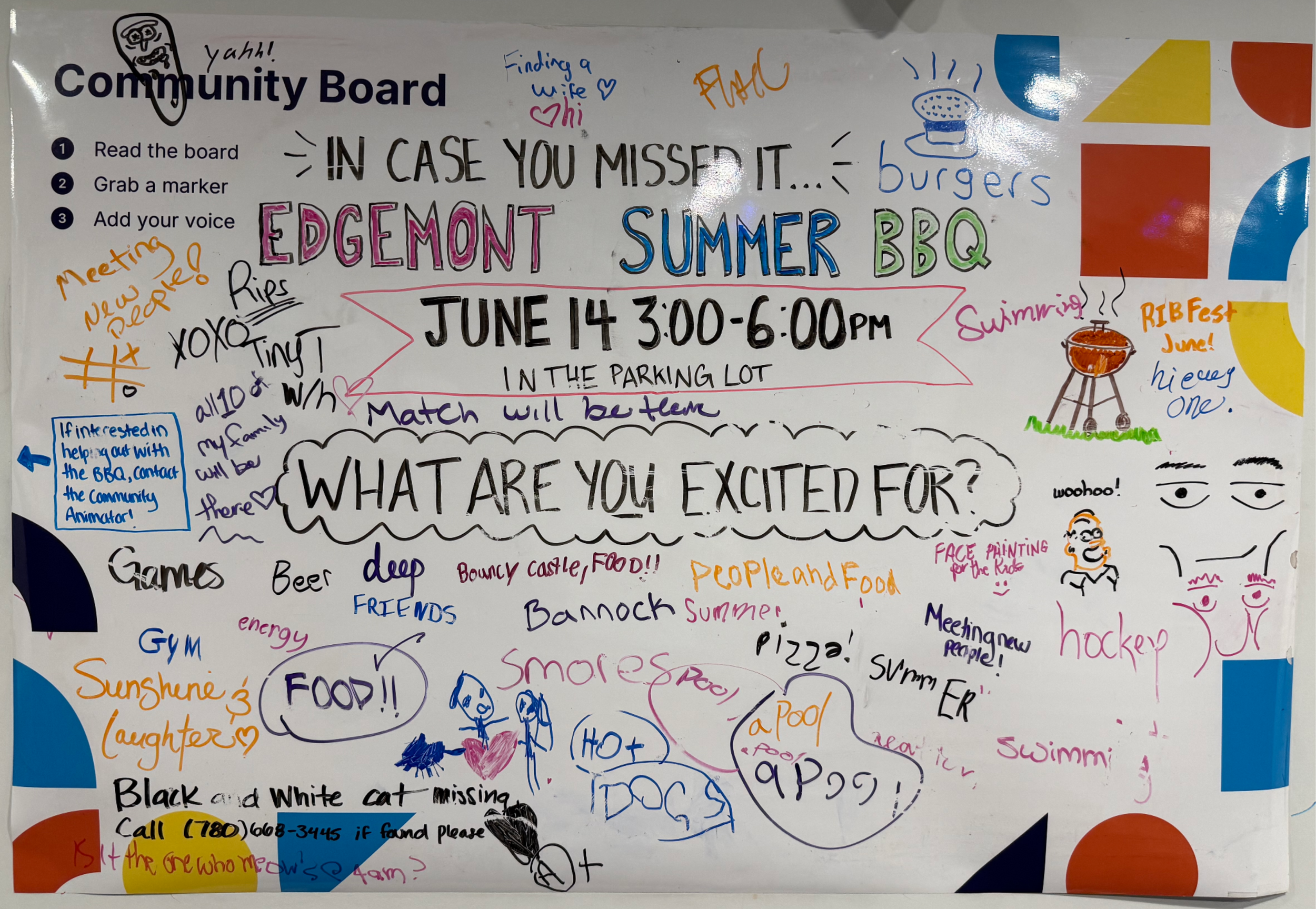
As part of promoting the community BBQ, we used the existing community boards to build interest and visibility in the lead-up to the event. We added simple prompts to encourage reflection and engagement among residents in shared spaces. The first prompt asked, “What are you most excited for about the BBQ?” and received 27 responses, allowing residents to share what they were looking forward to in a low-barrier way while also viewing the responses of others. Beyond serving as a promotional tool, the board became a casual opportunity for residents to interact with one another through comments and shared ideas. These exchanges fostered anticipation for the event and contributed to a growing sense of community connection in the weeks leading up to the BBQ.
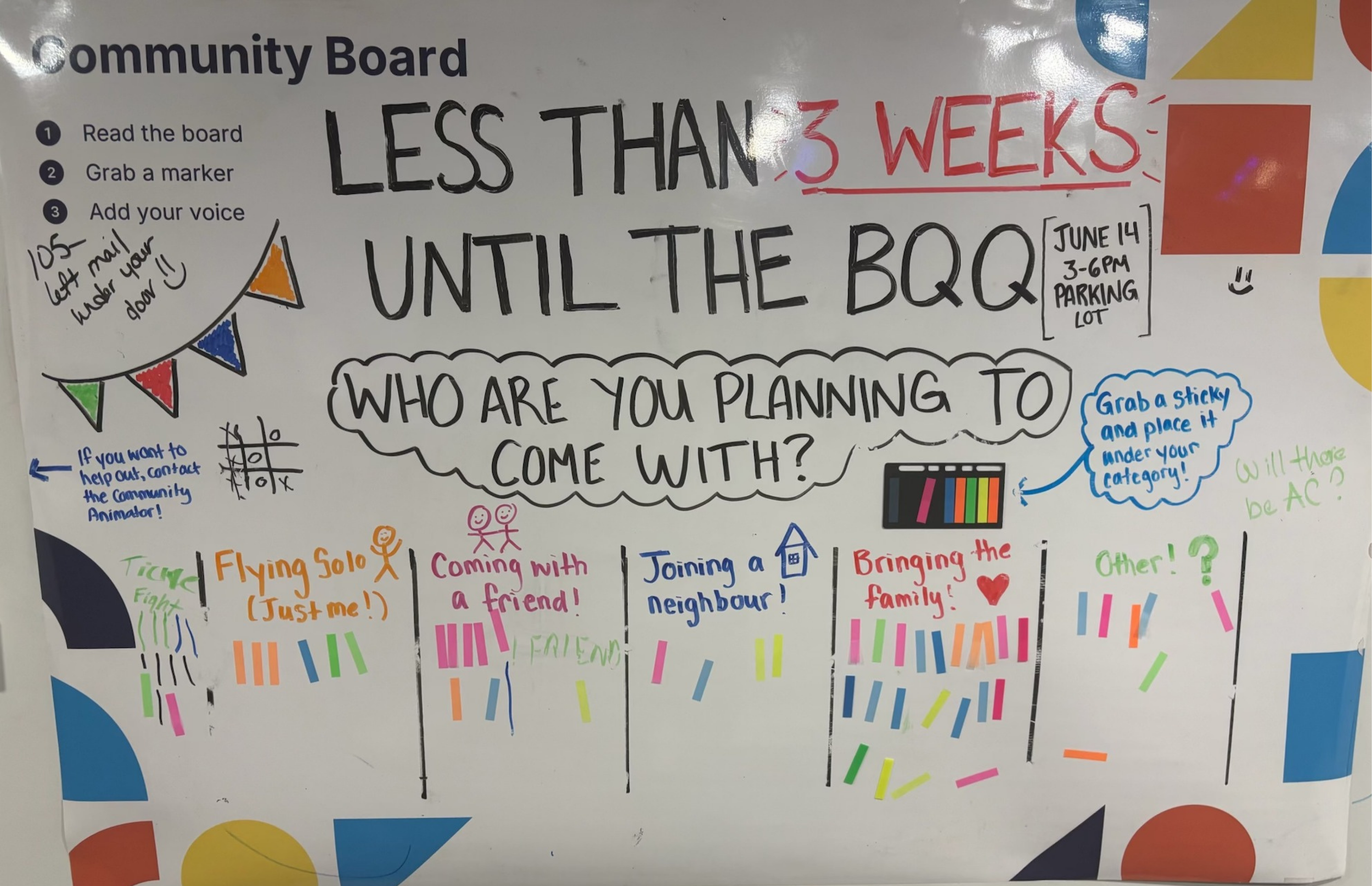
The second community board prompt encouraged residents to think about connection and community in anticipation of the BBQ. Residents were asked, “Less than 3 weeks until the BBQ! Who are you planning to come with?” and could respond with options such as “Flying solo (just me!),” “Coming with a friend,” “Joining a neighbour,” “Bringing the family,” or “Other.” Most responses indicated that residents would attend with family, friends, or neighbours (36/61), suggesting that existing relationships play an important role in supporting participation. Only six responses indicated attending alone, highlighting the importance of outreach efforts (e.g. personal invitations) and creating welcoming, inclusive event environments for residents with fewer existing social connections. By encouraging residents to think about who they might attend with, the prompt highlighted existing social connections within the community while also creating opportunities for residents to consider inviting neighbours or meeting new people at the event.
Scavenger Hunt
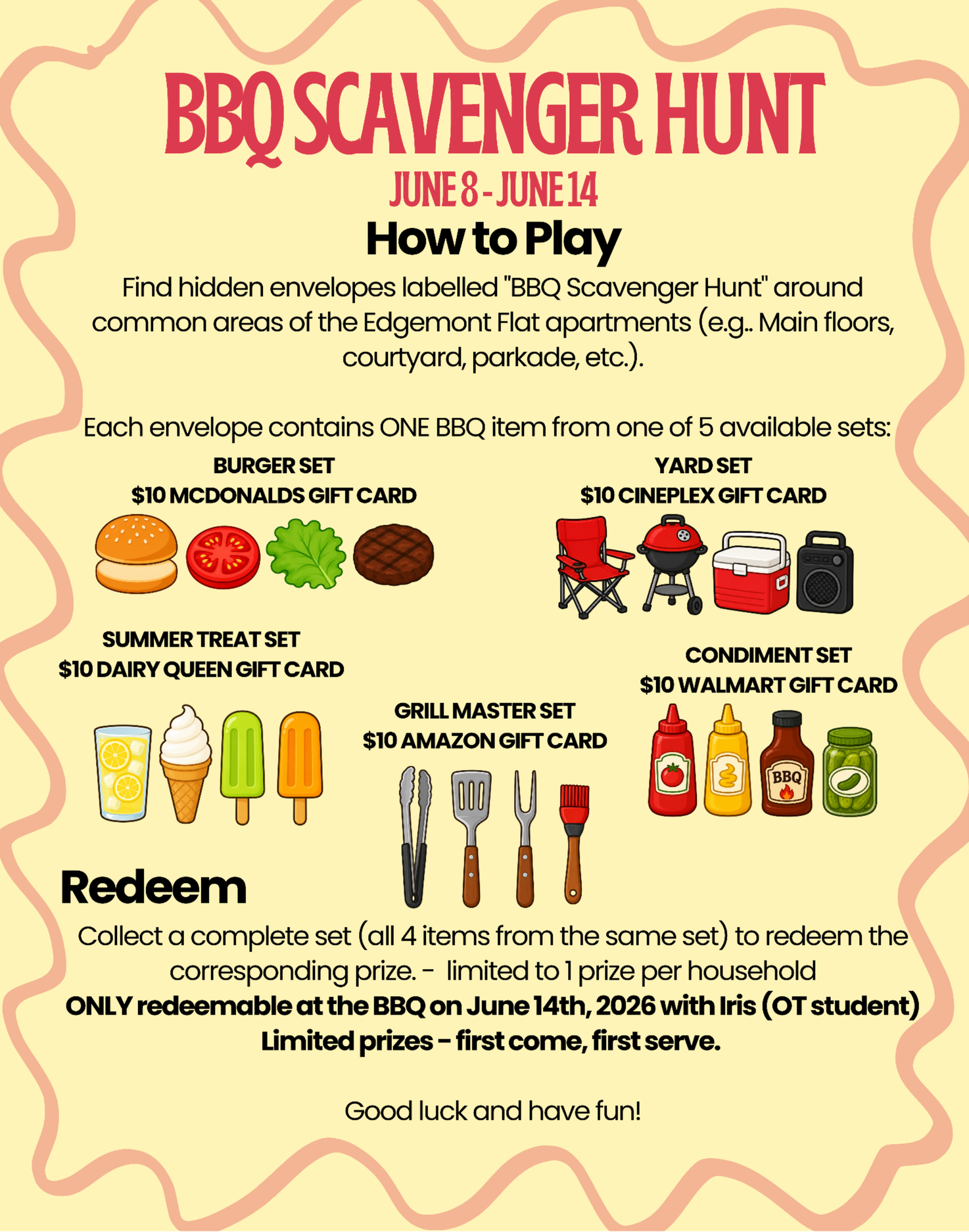
To gamify engagement with the physical community space and create low-pressure opportunities for residents to interact with one another, we developed a BBQ-themed scavenger hunt. One week before the BBQ, “game pieces” were hidden throughout the building. Each piece belonged to one of five themed sets (for example, the burger set included a bun, lettuce, tomato, and patty). To redeem the game pieces for a prize, residents were tasked with collecting all four pieces within a set and bringing the completed set to the BBQ, where it could be exchanged for a gift card related to that theme. To further encourage interaction, residents were invited to trade pieces with one another in order to complete their preferred set and earn the corresponding prize. In this way, the scavenger hunt not only promoted engagement with shared community spaces but also created opportunities for residents to connect and collaborate with one another.
Invitations
To increase accessibility and ensure residents could engage with information about the BBQ in multiple ways, we used a variety of invitation methods to meet different communication preferences. “Save the Date” invitations were shared through the community Facebook page and printed for distribution during pop-up events. Information about the pop-up events was also included in the community newsletter and posted on Facebook. In addition, pop-up events were held in high-traffic areas within the parking lots to increase visibility and accessibility.
Individual postcard-style invitations were delivered to every apartment unit in personalized envelopes identified by unit number. The building’s property management company, Leston Holdings, also sent email communications to residents with event details.
To further increase visibility and encourage informal interaction between residents, interactive posters were placed in each elevator. The posters featured a BBQ cut-out with a hinged lid that residents could lift, intended to encourage curiosity and create small moments of engagement during everyday routines.
Community Participation
To support the Community Animator’s role in encouraging participation in community events and programs, we included opportunities for residents to get involved in both the pop-up events and the community BBQ. We connected with residents supported by Skills Society and invited them to take part throughout the engagement process. Within the BBQ invitations, we also included a simple call-out inviting residents who were interested in helping out to contact the Community Animator for more information. A few residents helped out with face painting, monitoring the bouncy castle, and general setup with pop-up events, the scavenger hunt, and community boards.
Asset Mapping Activities
In an effort to reimagine asset mapping as a collective occupation, we designed two interactive asset-mapping activities for the BBQ. These activities were intended not only to gather information about the community but also to create opportunities for residents to connect and learn more about one another.
Edgemont Flats: Shaped by the People Who Live Here
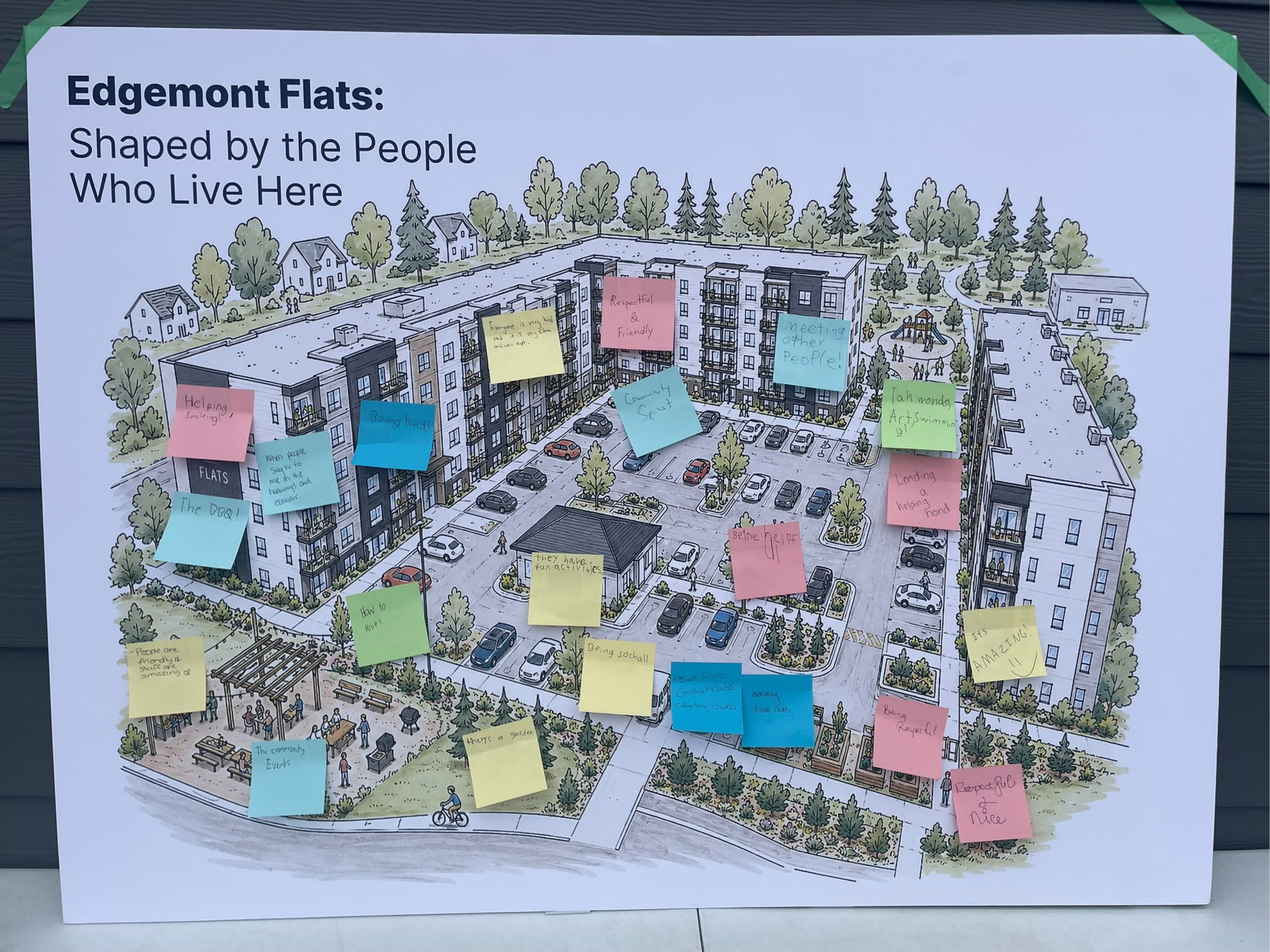
This asset-mapping activity was designed to encourage residents to reflect on their community while learning more about the people who live within it. The prompts focused on residents’ strengths, skills, interests, experiences, and what they value about living at Edgemont Flats, while also inviting reflection on perspectives of neighbour connections and ideas for strengthening the community. Using a large sketch of the apartment complex as the background, residents were invited to choose from a variety of prompting questions and write their responses on colour-coded sticky notes. A total of 24 responses were received for all of the prompts.
Residents highlighted the importance of neighbourly connections fostered through small, informal interactions, while residents also identified community events as opportunities to build closer connections. Residents also emphasized that living at Edgemont Flats is particularly enjoyable due to the activities offered and the friendliness of fellow residents. The inclusion of more themed “clubs” was noted as a helpful way to meet other residents in the future.
The Faces of Edgemont
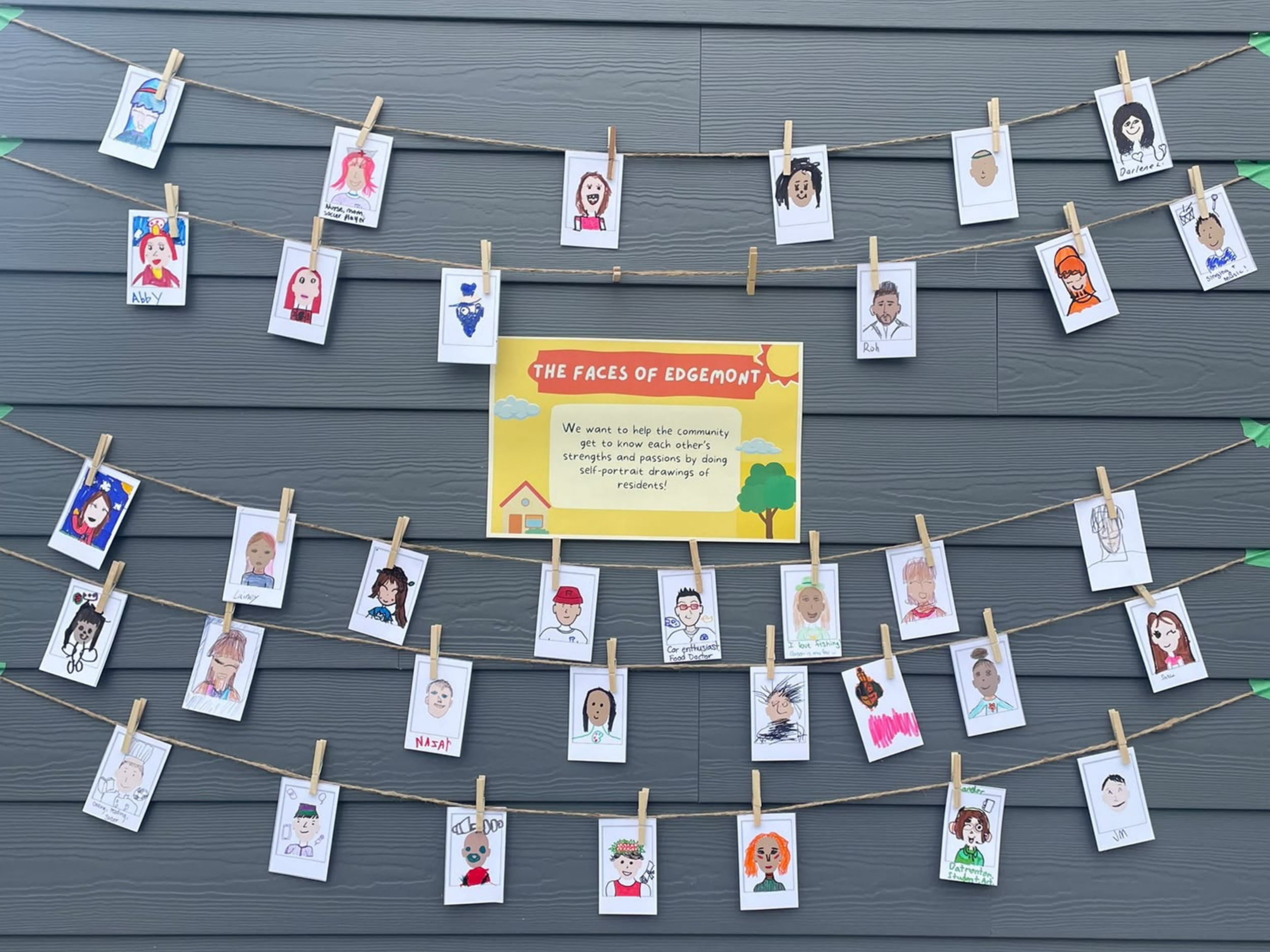
This asset-mapping activity was designed to encourage residents to reflect on their skills, interests, and identity while relating to others within the community. Using a blank face template as the background, residents were invited to personalize their page by drawing accessories, tools, clothing, hairstyles, or other features that represented who they are and what they value. Approximately 40 resident engagements were collected. This activity became more accessible for children and their families to participate in together, due to the open-ended nature of the activity prompt. A diverse collection of residents' backgrounds, hobbies, and interests was gathered from the Polaroid cards.
Why it matters
Fostering Belonging
For some, traditional asset-mapping may not seem of value to them or be functional or accessible. Our exploration of the process of community engagement through – not from – asset-mapping encouraged interconnectedness through occupation. Relationship-building and co-occupation aided people to find belonging and connection among some people who might have been otherwise unlikely to engage with each other. Belonging is about feeling safe, respected, and valued, and is important in the context of community living, especially among some marginalized folks who have a history of exclusion in Alberta. Our project aimed to promote belonging through occupation among people of all groups and walks of life at Edgemont Flats.
Encouraging positive self-image
Something else of importance that came out of this asset-mapping project is the simple outcome of people reflecting on their own assets, abilities, capabilities, and just what makes them special and unique. We want to promote the idea that everyone has something to offer, but this can be hard for individuals to recognize about themselves. Residents were encouraged to think about themselves differently during our created personality quiz, interactive boards, and asset-mapping activities. These activities also encouraged others around them to consider community strengths, which fosters interconnectivity and reciprocity.
Demonstrating the value of collective asset-mapping
Because of the reasons mentioned above and more, this project demonstrates how non-traditional methods of asset-mapping, and focusing on the collective process of it in and of itself, has value. Rather than building a sense of belonging based on asset-mapping results, we found that community can be built through the process itself. It encourages people to be active participants in the formation of their community and its interconnectedness. Giving people agency in this process fostered engagement, which in turn accomplished some of the goals of asset-mapping itself.
Looking back: what we learned
What we learned?
We now have a newfound appreciation for designing processes with a community. This project served as an opportunity to adopt a community development perspective in our practice. As a team, we spent a lot of time considering the question: “how do all the people, structures, policies, relationships, and environments interact to create a community engagement—and where can we design change across the system?” With appreciation that the answer to this is an ongoing, continuous process, we have captured some of our learnings to share a snapshot of what cultivating community engagement looks like:
See the Whole System
While this perspective is familiar to occupational therapy practice, we were challenged to use this lens on a community level. By mapping how different parts connect, people (residents, staff, landlords, agencies), policies, physical spaces, resources, and power dynamics become a complex landscape that functions like shared dialogue between seemingly distinct pieces. For example, in discussion with residents, low turnout rates at community activities is not simply an "engagement problem." It is an experience that is orchestrated by a collection of structures that include: cultural inclusion, scheduling barriers, childcare, building layout, and socioeconomic constraints. These findings call for a focus on the 'in-between' – relationships that are created from the interactions between things. When we spoke with the residents, they identified that the barriers to participation rehearse a similar sentiment: " residents don’t know each other," or "communication doesn’t reach everyone."
Co-Design with the Community, not for
At the onset of our project, we approached as a team of student professionals offering support to a community. Long meetings within our student team and rigorous research using academic literature were the pillars of our work ethic. However, this approach overlooked the most valuable principle of community development: Change is designed with stakeholders, not for them. Residents and community partners know best what they need and experience. This was demonstrated by our focus group that occurred a bit too late in our process. Our perceptions for what would support the community differed completely from the resident-realized needs. As a result, we learned to position the community members as the professionals, and situate ourselves as learners who are privileged with the opportunity to be invited, as a guest, into a space they call their home. Recognizing our roles as guests allowed us to design community experiences with humility and respect for the community members.
Our community project has challenged, but also strengthened, our ability to think systematically. As future OT clinicians, we now recognize our role in addressing participation barriers for not only the individual, but also the communities we serve at large. While it was difficult to navigate the feelings of overwhelm that came with discovering how participation barriers speak to and are spoken to by many intersecting factors, we have learned to appreciate sitting with this discomfort. This tension encouraged us to act with intentionality and be attuned to the relationships that socially engineer a space. Relationships are a key resource that enable occupational opportunities and define meaningful engagement in our everyday activities. Ultimately, assets are relationships to be discovered, and we hope that our project has served as an opportunity for discovery in the Edgemont Flats community.
– This piece was authored by Iris, Nicole, Megan, and Rachel, Occupational Therapy students from the University of Alberta, as part of their community project with Skills Society and the Community Animator at Edgemont Flats.